
Hope isn’t weak.
Hope is army crawling through debris with broken legs dragging behind you.
Hope is an unextinguishable flame. The lighthouse that illuminates the path through tumultuous waters.
Hope is persevering even when all evidence suggests that giving up is easier. Wiser. Justified.
Hope is delusional. Optimistic. Insane.
I believe I was thirteen years old the first time I read a quote from John Lennon.
He was asked in school what he wanted to be when he grew up.
“Happy.”
“John, you don’t understand the assignment.”
“You don’t understand life.”
When I read this quote, I was filled with warmth. Conviction. Comfort. Grief.
I didn’t know it then, but this quote would become a compass for me.
I decided to become happy. This was a tricky goal at the time. I was newly teenaged. I was penniless. My entire life was dictated by a couple of drunks who attempted to dictate every aspect of my personage. Most of my life was out of my control.
My entrance into psychotherapy was court mandated when I was four years old. I don’t know if every person who goes into the foster care system has to attend talk therapy, but my brothers and I were required to.
I was nervous. Suspicious. Fearful. I had the distinct impression that I was being tested, but I didn’t have the opportunity to study before the examination. I wanted to say the right things so that I would pass.
Although it pains me to admit it, I was not particularly suave about it. I was obviously terrified. One of the great irritations of being me is that every single emotion I have is written all over my face. I’m a caricature of a person.
A friend once called me the physical embodiment of onomatopoeia.
The point is, my therapist was not fooled. She could tell that I wasn’t being honest in our sessions. I was scripting and memorizing my monologues before our appointments, and she could tell.
My performance artistry lacked finesse.
“You know, I can’t help you unless you tell the truth.”
My foster mother weaponized therapy. She deeply believed that I was going to therapy to “fix” myself. That I was broken. She reminded me often that the therapy wasn’t having the desired effects.
“Why am I paying all this money for you to go to therapy when your attitude still sucks.”
I had an epiphany whilst traveling to my scheduled visit.
I may not have had a choice about whether I attended therapy, but I could use it to my advantage.
My therapist often reminded me that our sessions were confidential, unless I disclosed that I was planning on harming myself or someone else. I realized that I had a chance for fifty-minutes of freedom.
For the first time in my life, I realized that I had a choice before me that could alter my life forever if I took the leap.
I chose to be honest.
My first actual therapy session began that day. I walked through my personal history. I disclosed the horrors from my early childhood. My therapist walked me through a memory suppression technique. In the exercise, you visualize yourself in a natural location. I’ve always felt happiest in the woods, so I pictured myself in a clearing beneath a large oak tree.
“Visualize a cardboard box next to you, and a stack of sticky notes. These sticky notes are magical, so they expand to hold every word needed to record traumatic memories”
My therapist instructed me to fill each sticky note with a single memory from my early childhood. When each memory was fully inscribed, I pictured gently placing the sticky note into the cardboard box. Once all the sticky notes were filled, my therapist told me to visualize the box sealing with a bright white light.
“Now, see yourself burying the cardboard box under the base of the tree.”
You may be surprised to learn that a therapist instructed me to repress my childhood memories. I’m not an expert, but I suspect that this was purely to help me survive everything that happened to me when I was small.
The emotions that I was experiencing were too complex for a four-year-old, and I was barely coping. This technique allowed me to function.
The problem with this technique is that it’s temporary. I always had nightmares, but when I was sixteen they completely changed. One image on repeat. I would wake up screaming, shaking, drenched in sweat.
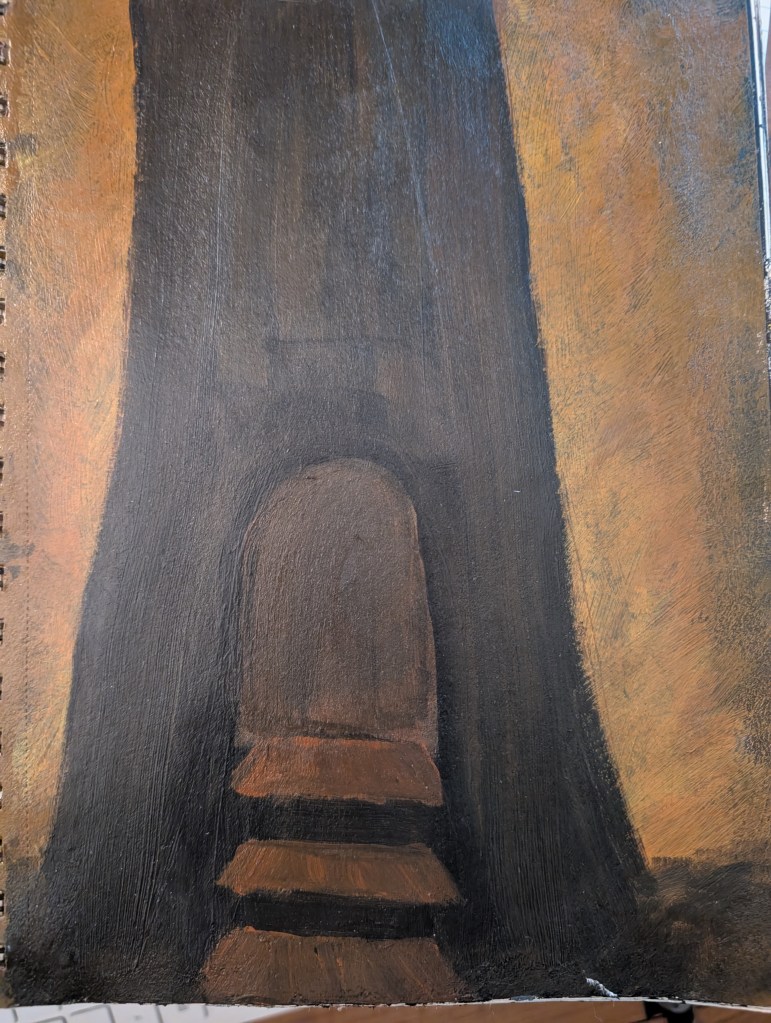
A great black oak tree.
I didn’t understand the significance at first. I borrowed dream dictionaries from the library. I researched dream symbolism on the internet. I journaled, ruminated, and worried.
I brought up the nightmares in one of my therapy sessions.
“That’s fascinating. You’re dreaming about the tree you buried your traumatic memories under. Don’t you remember?”
Riveting revelation, I’m sure.
The memories flooded back rapidly, as if the dam in my mind finally gave way. I could barely hold onto my sanity.
I still wonder if the repression technique would have held if I lived in a healthy household. I’ll never know exactly why these memories came back when they did, but I suspect it’s because my relationship with my foster family escalated when I turned sixteen.
I had finally realized that their sovereignty over my life was limited. They could not control my thoughts. And once I turned eighteen, they could no longer control me.
And I was cocky. Mirthful. Elated. A bit unhinged.
I would laugh in their faces while they hit me. I would sneer and egg them on while they screamed. I mocked and belittled their miserable little lives to hide that I was dying inside.
I never let them know how much they hurt me.
How could I do this, you ask?
Hope.
I hoped my little head off. I hoped that my life would turn around. Hoped that I was worthy of love. Hoped that I deserved better treatment. Hoped that I could make something of myself. Hoped that I would survive. Hoped that I would overcome whatever obstacles that came my way. Hoped that I would escape.
My unwavering optimism fueled their rage.
“Who do you think you are? You think you’re deserve better? You think you’re better than this? Well, we know the truth about who you are. We know where you come from. You’re scum. You’re trash. You’ll never amount to anything because you’re worthless.”
I hoped they were wrong.
So hear me when I say this. If you can’t find hope, you can borrow mine.
She’s never let me down.
 Perfectionist Rehab
Leave a comment